
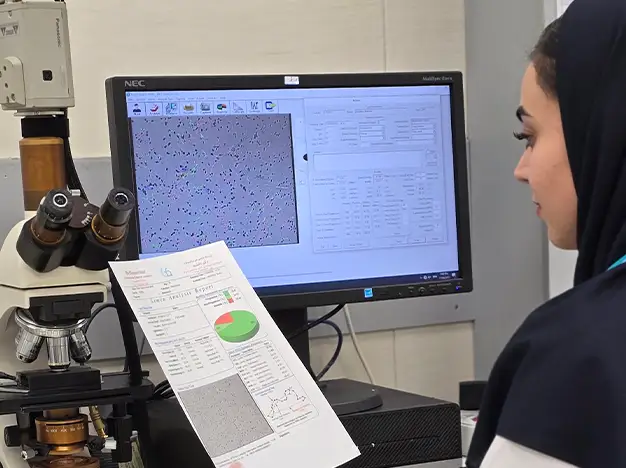
Semen Analysis
Spermogram Department | Male Fertility Assessment
A spermogram (semen analysis) is a specialized laboratory test used to evaluate sperm quality and male reproductive health. This test plays a critical role in the assessment of male infertility and in planning fertility treatments. At Dr. Daneshbod Pathobiology Laboratory, spermogram testing is performed with high accuracy and in accordance with international standards.
The Spermogram Department of Dr. Daneshbod Laboratory provides specialized services for evaluating male fertility by adhering to international guidelines—particularly those of the World Health Organization (WHO)—and utilizing precise laboratory equipment. Semen samples are collected according to proper protocols, and key parameters such as semen volume, pH, sperm count, motility, morphology, as well as the
What Is a Spermogram?
A spermogram, also known as semen analysis, is a specialized test that evaluates both the quality and quantity of sperm. It assesses the physical, microscopic, and cellular characteristics of semen and helps identify potential causes of male infertility. Performing a spermogram is usually the first diagnostic step in the evaluation and treatment of infertility.
Parameters Evaluated in a Spermogram
The following key parameters are measured during semen analysis:
Semen Volume: Normal range is 1.5 to 5 mL
Sperm Concentration (Sperm Count): Number of sperm per milliliter
Sperm Motility: Percentage and type of motile sperm
Sperm Morphology: Percentage of sperm with normal shape
Semen pH: Evaluation of acid–base balance
Viscosity and Liquefaction Time: Assessment of semen consistency and fluidity
White Blood Cells and Other Cells: Detection of infection or inflammation
Anti-Sperm Antibodies: Assessed in selected cases to evaluate immune-related infertility
Spermogram Procedure
Sample Collection:
Semen is usually collected by masturbation in a designated laboratory environment. In special cases, laboratory-approved condoms or electroejaculation may be used.Laboratory Analysis:
The sample is examined immediately after collection. The time between collection and analysis should not exceed 30 to 60 minutes.WHO-Based Evaluation:
All parameters are assessed according to the latest WHO guidelines.
Additional Tests Related to Spermogram
Anti-sperm antibody test
Sperm DNA Fragmentation (DFI) to assess sperm DNA integrity
Semen biochemistry (Fructose and Zinc)
Genetic testing and karyotyping
Hormonal tests (FSH, LH, Testosterone)
When clinically indicated—such as in cases of low sperm motility, low sperm count, or a history of infertility—the laboratory also offers advanced tests including DNA Fragmentation Index (DFI) analysis.
Semen Sample Collection Instructions
Due to the sensitivity of this test and to ensure accurate results, please carefully follow the instructions below:
A minimum of 48 hours (2 days) and a maximum of 7 days (168 hours) must have passed since the last ejaculation.
The sample must be collected completely in the sterile container provided by the laboratory. Special attention should be paid to collecting the first portion of the sample.
Avoid urination within 30 minutes prior to semen collection.
Sample collection is performed according to the order of laboratory admission.
Sample collection hours are daily from 12:30 PM to 2:00 PM.
Avoid contamination of the semen sample with urine, soap, lubricants, or disinfectants.
Inform laboratory staff if you have any chronic medical conditions (such as diabetes) or are taking any medications or substances, especially:
Antibiotics (e.g., erythromycin, gentamicin)
Cimetidine
Amiodarone
Digoxin
Phenytoin
Narcotics
Cigarettes
Hormonal medications
Chemotherapy drugs
Herbal medications
Why Is Spermogram Testing at Dr. Daneshbod Laboratory Different?
Testing performed strictly according to WHO standards
Expert interpretation by experienced pathologists
Private and confidential sample collection environment
Online access to test results
Free consultation for result interpretation and guidance on further treatment steps
Importance of Spermogram in Infertility Treatment
Male infertility accounts for approximately 40–50% of infertility cases among couples. A spermogram provides detailed information about sperm count, motility, and quality, and can identify many fertility-related issues without the need for more complex tests.