
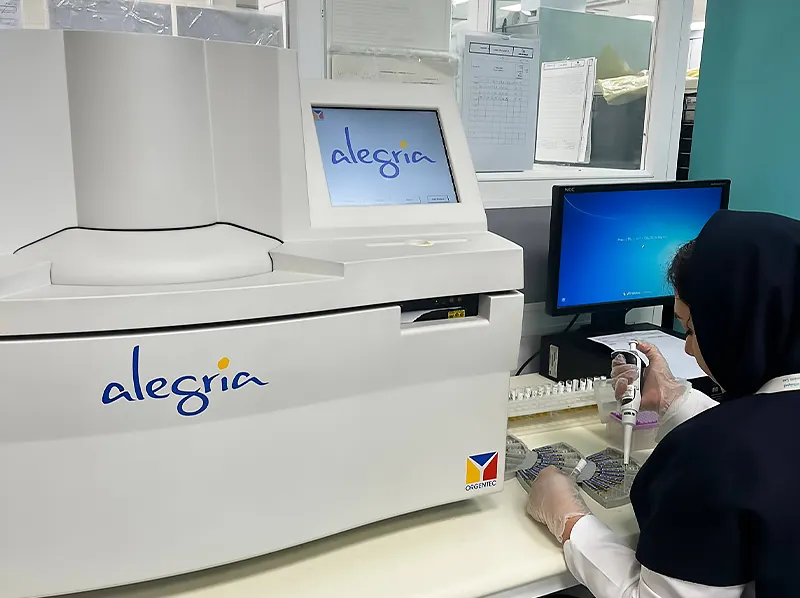
Immunology Testing
Immunology Department at Dr. Daneshbod Pathobiology Laboratory in Shiraz
The Immunology Department at Dr. Daneshbod Pathobiology Laboratory in Shiraz is one of the laboratory’s specialized departments, focusing on the assessment of immune system function and immune-mediated responses. Many immune disorders, autoimmune diseases, allergies, and chronic inflammatory conditions may initially present with general or nonspecific symptoms. Physicians therefore require reliable and clinically interpretable laboratory results to evaluate a patient’s condition more accurately.
Tests in this department are performed in accordance with established principles of specimen collection, sample preparation, quality control, and technical result assessment. The purpose is to provide results that can support clinical decision-making when interpreted alongside the patient’s physical examination, medical history, symptoms, and other medical findings.
The role of the Immunology Department is not limited to performing individual tests. The objective is to ensure that each result is scientifically reliable and clinically useful to the treating physician.
What Is Immunology Testing?
Immunology testing refers to a group of laboratory tests used to assess immune system status, detect specific antibodies, investigate allergic responses, evaluate inflammatory markers, and support the assessment of certain autoimmune diseases.
The immune system normally protects the body against infectious and harmful agents. However, its function may occasionally become dysregulated. It may become overactive, react to substances that are normally harmless, or mistakenly target the body’s own tissues.
In such situations, immunology tests can help physicians investigate the possible underlying condition and determine whether additional diagnostic testing may be required.
The Importance of Evaluating the Immune System
The immune system is one of the body’s primary defense mechanisms against environmental and infectious agents. This complex network of cells, tissues, and organs is responsible for identifying and responding to foreign agents such as viruses, bacteria, and allergens.
When immune system function becomes impaired or dysregulated, two broad patterns may occur:
1. Inadequate or Impaired Immune Response
(Immunodeficiency)
When the immune system does not function effectively, the body may become more susceptible to certain infections. Specialized immunology and infectious serology investigations, when evaluated alongside clinical symptoms and other medical assessments, can help physicians investigate possible causes of impaired immune function.
2. Excessive or Inappropriate Immune Response
(Autoimmunity and Allergy)
In some cases, the immune system reacts against the body’s own cells and tissues rather than targeting foreign agents, contributing to the development of autoimmune disease.
In other individuals, the immune system may produce an allergic response to environmental or dietary substances that are normally harmless.
Allergies: Allergic reactions can range from mild symptoms to severe reactions such as anaphylaxis. Measuring allergen-specific IgE against selected allergens may help identify possible triggers when interpreted together with the patient’s medical history, symptoms, and physician’s assessment.
Autoimmune diseases: Timely laboratory evaluation in areas such as rheumatology, gastroenterology, hepatology, and neurology can support more accurate assessment and assist physicians in planning appropriate follow-up and treatment.
Why Is Accuracy Important in Immunology Testing?
Laboratory accuracy is particularly important when investigating immune-mediated diseases. Delayed diagnosis or inappropriate interpretation of test results may complicate the evaluation of conditions affecting the nervous system, joints, kidneys, skin, or gastrointestinal tract.
Depending on the test, Dr. Daneshbod Pathobiology Laboratory uses methods such as indirect immunofluorescence (IIF), enzyme-linked immunosorbent assay (ELISA), and Line Blot testing.
The use of specialized panels, appropriate quality-control procedures, and careful technical evaluation of results can support a more accurate assessment of the patient’s condition and assist the treating physician in clinical decision-making.
Which Tests Are Performed in the Immunology Department at Dr. Daneshbod Laboratory?
The Immunology Department at Dr. Daneshbod Pathobiology Laboratory performs tests related to autoimmune diseases, allergies, inflammation, and selected immune responses based on the physician’s request.
The appropriate test depends on the patient’s symptoms, the physician’s suspected diagnosis, and the purpose of the investigation.
Tests performed in this department may include the following:
1. Systemic Autoimmune and Rheumatologic Diseases
(Systemic Autoimmune Rheumatologic Diseases)
These tests are used to support the evaluation of systemic autoimmune diseases such as systemic lupus erythematosus, inflammatory arthritis, and certain forms of vasculitis.
Antinuclear and disease-associated antibodies:
- ANA
- Anti-dsDNA
- Anti-CCP
- ENA Profile, including SSA, SSB, Sm, RNP, Jo-1, Scl-70, Histone, Nucleosome, Ro52, and Centromere antibodies
Vasculitis and complement system evaluation:
- MPO-ANCA
- PR3-ANCA
- C1q
- CH50
Anti-glomerular basement membrane antibody:
- Anti-GBM
Anti-GBM testing is performed upon a physician’s request to support the evaluation of anti-glomerular basement membrane disease, particularly when renal involvement or pulmonary–renal syndrome is suspected.
Antiphospholipid antibody testing:
- Anticardiolipin Antibody, or ACLA
- Anti-β2 Glycoprotein I Antibody
HLA testing:
- HLA-B27
- HLA-B7
- HLA-B5
- HLA-B51
- HLA-B8
HLA test results must be interpreted in relation to the patient’s symptoms, medical history, and other clinical findings. The presence of an HLA marker alone does not confirm a specific disease.
2. Gastrointestinal and Hepatic Immunology
(Gastro-Hepato-Immunology)
This group includes tests requested to support the evaluation of certain autoimmune liver diseases, inflammatory bowel diseases, pernicious anemia, and celiac disease.
Tests associated with autoimmune liver disease:
- ASMA
- AMA
- LKM
- SLA
- Anti-parietal Cell Antibody
Gastrointestinal and celiac-related tests:
- ASCA
- Calprotectin
- Gliadin Antibody
- EMA, or Endomysial Antibody
Other tests:
- Anti-intrinsic Factor Antibody
The type and combination of celiac-related tests should be selected according to the physician’s request, the patient’s clinical condition, and the other tests included in the laboratory order.
3. Infectious Serology
Infectious serology tests are performed to assess the body’s immune response to selected infectious agents or to support the investigation of specific infections.
Viral agents:
- EBV
- HSV
- Parvovirus B19
- VZV
- Mumps
- Measles
Bacterial agents:
- Brucella
- Listeria
- Borrelia
Serological results should be interpreted according to the timing of symptom onset, the stage of the infection, the type of antibody measured, and other clinical findings.
4. Reproductive Immunology
- ASA, or Antisperm Antibody
This test may be performed in selected cases, upon a physician’s request, to support the evaluation of certain immune-related factors associated with infertility.
5. Neuroimmunology
Specialized immunology tests may be performed to support the evaluation of autoimmune disorders affecting the nervous system.
These tests may include:
- MOG-IgG
- AQP4-IgG, or NMO Antibody
- AChR Antibody
- GAD Antibody
These antibodies may be used in the evaluation of conditions such as neuromyelitis optica spectrum disorders, MOG antibody-associated disease, myasthenia gravis, certain neurological disorders, and type 1 diabetes.
The appropriate test should be selected based on the patient’s symptoms and the specialist physician’s clinical assessment.
6. Specialized Neuroimmunology Panels
Given the complexity of autoimmune diseases affecting the nervous system, Dr. Daneshbod Laboratory provides specialized panels to support the evaluation of autoimmune encephalitis and paraneoplastic neurological syndromes.
By detecting specific antibodies against neuronal surface or intracellular antigens, these tests may help investigate inflammatory causes of certain movement disorders, cognitive changes, and seizures when interpreted alongside the neurological examination, imaging studies, cerebrospinal fluid analysis, and other clinical findings.
Autoimmune Encephalitis Panel:
This panel assesses antibodies associated with limbic encephalitis and other autoimmune inflammatory disorders of the brain, including:
- NMDA-R
- AMPA-R
- GABA-B
- LGI1
- CASPR2
Paraneoplastic Syndrome Panel:
This panel assesses antineuronal antibodies, including:
- Anti-Hu
- Anti-Yo
- Anti-Ri
- CV2
- Ma2
- Amphiphysin
Detection of these antibodies may raise the possibility that neurological symptoms are associated with an underlying malignancy and may guide the physician toward additional investigations.
A positive result from these panels alone does not establish a definitive diagnosis of a tumor or paraneoplastic neurological syndrome.
7. Allergen-Specific IgE Profiles
A. Food Allergy Panel
This panel may include allergen-specific IgE testing for the following substances:
Egg white, cow’s milk, casein, wheat flour, barley flour, rice, mixed edible seeds, sesame, peanut, soybean, hazelnut, almond, pistachio, walnut, gluten, strawberry, apple, grape, kiwi, banana, mango, peach, cherry, melon, mixed citrus fruits, tomato, potato, bell pepper, garlic, celery, eggplant, chicken, mixed meats, shrimp, and mixed seafood.
B. Inhalant Allergy Panel
Animals and insects:
Cat, dog, horse, cow, sheep, mixed feathers, mixed cage-bird feathers, honeybee venom, and German cockroach.
Environmental agents and fungi:
House dust, dermatophytes, Penicillium, Cladosporium, Aspergillus fumigatus, and Alternaria.
Plants and pollens:
Oat, foxtail grass, mugwort, plantain, goosefoot, thistle, amaranth, rose, sorrel, maple, ash, white pine, mulberry, and mixed tree pollens.
Important information about allergy test interpretation:
A positive allergen-specific IgE result does not necessarily confirm a clinical allergy. It may only indicate immunological sensitization to the tested allergen.
The selection of an allergy panel and the interpretation of its results should be based on the patient’s symptoms, history of exposure or consumption, and assessment by a physician or allergy specialist.
Foods should not be eliminated from the patient’s diet solely on the basis of a laboratory result without medical advice.
Who May Need Immunology Testing?
A physician may request immunology testing for patients with symptoms or clinical conditions such as:
- Joint pain, swelling, or stiffness
- Persistent unexplained fatigue
- Recurrent or prolonged inflammation
- Skin rashes, urticaria, or other hypersensitivity reactions
- Allergic symptoms such as itching, sneezing, nasal discharge, or shortness of breath
- Thyroid disorders with a possible autoimmune basis
- Recurrent fever or fever of unknown origin
- A family history of autoimmune disease
- The need to monitor treatment response in immune-mediated or rheumatologic diseases
The presence of these symptoms alone does not confirm an autoimmune disease or allergy.
Immunology tests have greater diagnostic value when interpreted alongside the physician’s examination, a detailed medical history, and other clinical findings.
The Importance of Quality Control in the Immunology Department
Immunology tests require a high level of technical accuracy and careful interpretation. Factors such as specimen quality, timing of collection, storage and transportation conditions, medications, the patient’s inflammatory status, and the stage of disease may affect certain test results.
At Dr. Daneshbod Pathobiology Laboratory, quality control, assessment of specimen conditions, accuracy throughout the testing process, and evaluation of unexpected results are important components of the Immunology Department’s workflow.
When a result does not appear consistent with the specimen condition or the available clinical information, additional technical evaluation may be performed to increase confidence in the final reported result.
This level of accuracy is particularly important for patients undergoing follow-up for autoimmune, rheumatologic, allergic, or inflammatory diseases, as physicians may adjust treatment or follow-up plans based on the overall laboratory findings and the patient’s clinical condition.
Is Any Special Preparation Required for Immunology Testing?
Many immunology tests are performed using a blood sample and do not usually require fasting. However, the preparation requirements are not the same for every test.
Patients are advised to bring their physician’s laboratory order and information about all medications they are currently taking. Exact sample collection requirements should be determined based on all tests included in the order.
Patients taking corticosteroids, anti-inflammatory medications, rheumatologic medications, immunosuppressive agents, or allergy-related treatments should inform the reception or phlebotomy staff before specimen collection.
Certain medications may affect immune responses, inflammatory activity, or the interpretation of specific results. Prescribed medications should not be discontinued or changed without instructions from the treating physician.
How Are Immunology Test Results Interpreted?
Immunology test results must be interpreted with caution. An elevated value, a positive test, or a result outside the reference interval does not always confirm the presence of disease.
Similarly, a normal or negative result does not necessarily exclude every possible condition.
When interpreting immunology results, physicians usually assess several factors together:
| Factor Affecting Interpretation | Why It Matters |
|---|---|
| Patient’s signs and symptoms | The laboratory result should be evaluated in relation to the patient’s clinical presentation and actual symptoms. |
| Medical history | Previous medical conditions and family history may influence the interpretation of the result. |
| Medications | Certain medications can affect immune responses, inflammatory activity, or the results of specific tests. |
| Other laboratory tests | Additional tests such as CBC, ESR, CRP, liver function tests, kidney function tests, or hormonal assessments may be required. |
| Changes in results over time | In some conditions, evaluating trends over time may be more informative than interpreting a single isolated result. |
| Testing methodology | Results obtained using different laboratory methods may have different reference intervals or analytical sensitivity. |
The most appropriate interpretation is therefore achieved when the test result is evaluated alongside the patient’s symptoms, medical history, other investigations, and the treating physician’s clinical assessment.
Why Is It Important to Perform Immunology Tests at a Reliable Laboratory?
Immunology testing is not always a simple blood test. Many immunological tests require careful specimen collection, correct implementation of the analytical method, quality-control procedures, and specialized assessment of the result.
Errors during the pre-analytical stage, the testing process, or result reporting may affect the final result or its interpretation.
At Dr. Daneshbod Pathobiology Laboratory, every effort is made to process each specimen accurately and responsibly because the results provided to the physician may contribute to diagnosis, treatment monitoring, or clinical decision-making.
This approach is one of the fundamental principles of professional practice within the Immunology Department.
Immunology Testing in Shiraz
Dr. Daneshbod Pathobiology Laboratory is located at No. 25, East Ordibehesht Street, Shiraz.
Patients can use the laboratory’s in-person and online services to undergo immunology testing, review specimen collection requirements, complete online admission, and obtain additional information.
Laboratory telephone numbers:
- +98-713287
- +98-7132117000
- +98-7191690790
Home specimen collection may be available for certain tests, depending on the type of test, the patient’s condition, and the specimen storage and transportation requirements.
Final confirmation of home specimen collection is provided after the laboratory order and testing requirements have been reviewed.
Frequently Asked Questions About the Immunology Department at Dr. Daneshbod Laboratory
What Are Immunology Tests Used For?
Immunology tests are performed to assess immune system function and support the investigation of autoimmune diseases, allergies, inflammation, and certain immune responses.
The physician determines which test is required based on the patient’s symptoms, medical history, and the purpose of the investigation.
Is Fasting Required for Immunology Tests?
Fasting is not required for many immunology tests. However, specific preparation may be necessary depending on the type of test and any other tests included in the physician’s order.
Patients are advised to contact the laboratory before attending to confirm the applicable specimen collection requirements.
Can Medications Affect Immunology Test Results?
Yes. Certain medications, including corticosteroids, anti-inflammatory medications, rheumatologic medications, and immunosuppressive agents, may affect some test results.
All current medications should be reported during admission or specimen collection. However, prescribed medications should not be discontinued without instructions from the treating physician.
Does a Negative Immunology Test Completely Rule Out Disease?
Not always. Some diseases may produce different laboratory findings at different stages.
Based on the patient’s symptoms, the physician may recommend additional testing, repeat testing, or follow-up assessment at another time.
Does a Positive Allergy Test Confirm a Clinical Allergy?
No. A positive allergen-specific IgE result may indicate immune sensitization to an allergen, but a clinical allergy can only be assessed by interpreting the result in relation to the patient’s symptoms, history of exposure or consumption, and the physician’s evaluation.
Where Can Immunology Tests Be Performed in Shiraz?
Specialized immunology tests are performed according to the physician’s laboratory order at the Immunology Department of Dr. Daneshbod Pathobiology Laboratory in Shiraz.
The required specimen type, patient preparation, and availability of home specimen collection should be reviewed separately for each test.
Conclusion
The Immunology Department at Dr. Daneshbod Pathobiology Laboratory in Shiraz supports physicians and patients in the evaluation and follow-up of autoimmune diseases, inflammatory conditions, allergies, and selected immune disorders through the scientific assessment of immune system function.
Accurate specimen collection, quality control, technical evaluation of results, and responsible reporting are essential components of the services provided by this department.
Immunology testing provides the greatest clinical value when results are interpreted alongside the patient’s symptoms, medical history, other medical findings, and the treating physician’s professional assessment.
The information provided on this page is for educational purposes only and is not a substitute for medical examination, diagnosis, or professional medical advice.